I sit in my small clinic room in Dharamsala while the monsoon rain beats violently against the corrugated tin roof. It is a loud and chaotic sound that drowns out the noise of the auto-rickshaws on the street below. A young man from Germany sits across from me. He is shaking so hard that his knees knock against the wooden legs of my desk. He holds a ceramic cup of sweet butter tea in his hands but he cannot drink it. His teeth are clicking together. He came to India to find peace. He went to a ten-day silent Vipassana retreat in the mountains above the town. He followed the instructions exactly as they were given. He watched his breath. He scanned his body for sensations. On the seventh day, the floor beneath him simply disappeared.
He tells me he looked at his hands and did not recognize them. They looked like dead meat attached to a stranger's arms. He has not slept in four days. I watch his shoulders. They are pulled up tight near his ears. His nervous system is trapped in a massive sympathetic charge. He is staring at the wall behind my head.
"I am going crazy," he whispers.
I shake my head. I reach out and place my palm flat on the cool wood of the desk between us. I ask him to look at the grain of the wood. To feel the pressure of his boots against the floorboards. I tell him he is not going crazy. His mind just opened much faster than his nervous system could tolerate.
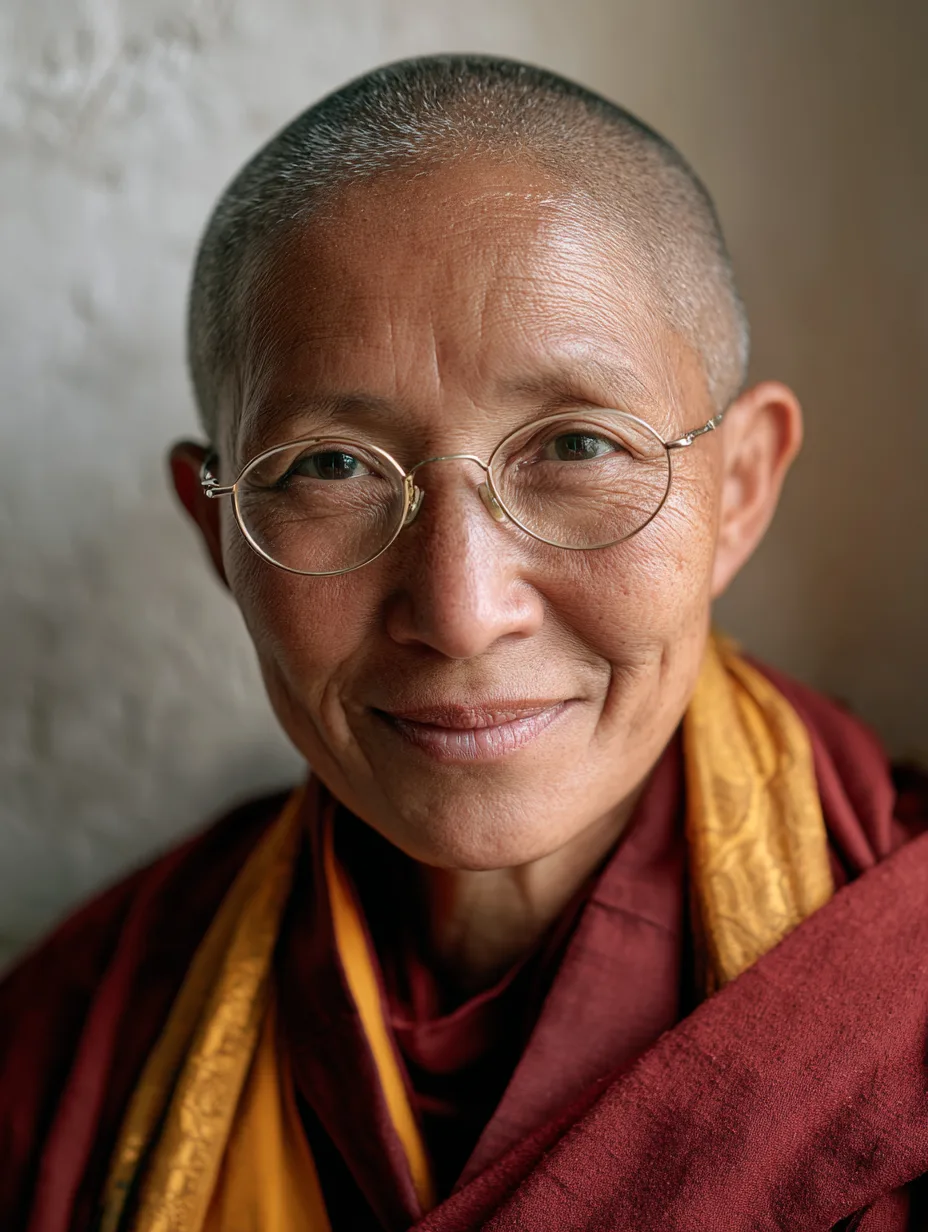
I am an ordained Buddhist nun. I wear the maroon robes of my tradition. My head is shaved. People come to me expecting me to tell them to just keep sitting. They want me to tell them to observe the panic. To watch the terror arise and watch it pass away. But I am also a trauma therapist. My training in Somatic Experiencing taught me that the mammalian body has absolute physical limits. When a human body is screaming in terror, you do not force it to sit still on a cushion and watch itself burn.
We have sold the world a very simple story about mindfulness. We have told people it is entirely safe. We package it as a way to calm down after a difficult day at the office. But meditation is a technology of deconstruction. It was designed thousands of years ago to dismantle the illusion of the self. If you succeed in dismantling the self before you have built a secure psychological container, you do not find enlightenment. You find fragmentation.
The Quiet Statistics of Harm
The numbers are there for anyone willing to look at them. Data from the National Center for Complementary and Integrative Health shows that 8.3 percent of meditators report clinically significant adverse effects. That is a heavy, difficult statistic. It is often ignored by the wellness industry.
Willoughby Britton and her colleagues at Cheetah House at Brown University have spent years listening to the people who fall through the cracks of modern meditation culture. They gathered the stories of those who went to retreats and came back broken. They have carefully documented cases of severe depersonalization. This is a state where the self shatters and leaves behind a ghost. They recorded psychotic episodes triggered by intensive practice. They saw severe retraumatization in people who thought they were simply observing their breath.
I read these studies and I often cry. I cry because I know exactly what that shattering feels like. I have seen it in the Tibetan refugees I treat here in Dharamsala. I have seen it in the Western seekers who stumble down the mountain into my clinic. And I have felt it in my own body.
I was born Tsering Dolma in the high cold deserts of Ladakh. The mountains there are bare and brown. The air is so thin it hurts your lungs to run. When I was twelve years old, my older brother died in a violent border skirmish. I remember the exact quality of the afternoon light hitting the dust in our courtyard the day the soldiers brought the news. My body froze completely. A heavy block of ice formed deep in my belly. My breathing became shallow. I carried that ice inside me for decades.
When I ordained and began meditating seriously in my twenties, I believed the cushion would melt the ice. I sat for hours in the freezing shrine room. I tried to generate loving-kindness. I tried to focus my attention on the sensation of air touching the tip of my nose. But every time I grew perfectly still, the panic would rise up from my belly. My heart would hammer violently against my ribs. I felt like I was drowning in the thin mountain air. My teachers told me to push through it. They told me it was just karma burning off.
But the panic did not burn off. It grew worse. I started losing time. I would find myself staring at the wall of my small room, unable to move my legs, perfectly dissociated from the present moment. I was experiencing retraumatization. The silence of the meditation hall was actively stripping away the psychological defenses I had built to survive my brother's violent death. My mind was opening, but my body was flashing back to the dust and the terror of that afternoon in Ladakh.
Eventually I was given permission to travel to the West. I went to Zurich to study trauma. The city was so clean and orderly it made my eyes ache. Under the guidance of clinical instructors, I learned about the autonomic nervous system. I learned about the psoas muscle and how it contracts in the fetal position during moments of inescapable threat. I was taught the mechanics of Somatic Experiencing. We studied titration - the incredibly slow process of taking tiny drops of distress and processing them safely. We learned to pendulate. We would teach the body to swing back and forth between a feeling of safety and a small feeling of discomfort.
I realized then that intensive meditation often does the exact opposite of titration. A ten-day silent retreat demands that you flood your nervous system with completely unfiltered internal sensations for fourteen hours a day. For someone with a history of trauma, this is like putting a live electrical wire directly into a puddle of water.
The Maps We Forgot How to Read
The tragedy is that our own Buddhist traditions have always known about this danger. We simply stopped teaching the warnings.
In the fifth century, the scholar Buddhaghosa wrote the Visuddhimagga in Sri Lanka. It translates to the Path of Purification. It is the core meditation manual of the Theravada tradition. Inside this massive text, there is a very specific map of the stages of insight. These stages are called the dukkha-nanas. The knowledges of suffering. Sometimes Western practitioners refer to this territory as the dark night of the soul.
The Visuddhimagga explains what happens when human perception becomes incredibly sharp. As concentration deepens, you stop seeing solid objects. You begin to observe phenomena arising and passing away with terrifying speed. There is a specific stage on this map called bhanga. This translates to dissolution. The practitioner perceives that the solid world is actually just vibrating particles flashing in and out of existence. Your body is no longer your body. It is a chaotic storm of sensation.
When your reality dissolves like this, the map tells us exactly what happens next. The very next stage is bhaya. Terror. This is followed immediately by adinava. Danger. Then comes nibbida. Disgust.
These are not failures of meditation. Let me repeat this because it is so important. Experiencing terror and dissolution is the map working exactly as it was intended. The practice is actively dismantling the ego structure. The problem occurs when a practitioner hits the stage of bhaya without a teacher who knows how to hold them through it. Retreat centers often hand beginners this highly advanced map without teaching them how to read the terrain. They drop people into the deep end of ego-dissolution and then act surprised when those people have psychotic breaks.
I see this collision of ancient maps and modern fragility every week. A woman from California came to me last month. She had been practicing intense body-sweeping meditation. She reached a point where she could no longer feel the boundaries of her own skin. She felt she was bleeding out into the atmosphere. She was terrified to go to sleep because she believed she would cease to exist if she lost conscious control of her awareness.
I did not tell her to observe her fear. I gave her a heavy wool blanket. I made her eat a bowl of hot potatoes with thick butter. I had her press her bare feet into the muddy ground outside my clinic. We spent an hour just naming the colors of the objects in my office. Red book. Yellow cup. Blue chair. We had to literally build the walls of her ego back up before she drifted away entirely.
Listening When the Body Screams
We must learn to distinguish between the normal, necessary hardships of spiritual practice and the dangerous symptoms of clinical harm. I tell my students that I do not know everything. I say "I don't know" very often. But I do know how to read a frightened body.
Normal meditation practice is uncomfortable. Your knees will ache. Your back will burn. You will experience intense boredom. You will feel restlessness making your skin itch. You might feel a passing wave of deep sorrow or grief. You might cry. These are safe physiological reactions. They are the friction of ordinary human suffering meeting the cushion.
But there is a different category of experience that requires immediate intervention. We must recognize the signs of a nervous system losing its capacity to cope.
I watch my patients carefully when they describe their practice. I look for the physical markers of dissociation. If a meditator tells me they feel like they are floating above their body watching themselves sit, I become very alert. This is not a high spiritual attainment. This is often an extreme trauma response. The brain is cutting the cord to the physical body because the sensations in the body have become intolerable.
If someone stops sleeping for multiple days during a retreat, this is a dangerous red flag. Sleep deprivation severely lowers the threshold for psychosis. The mind begins to construct waking dreams to compensate for the lack of rest. When you combine sleep deprivation with intense inward focus and social isolation, you are creating a perfect laboratory for a mental health crisis.
Trembling that does not stop. A total loss of appetite where food tastes like ash. Intrusive, violent images flashing behind closed eyes. Panic attacks that leave the chest feeling bruised and hollow. A heavy, deadening depression that drains all color from the world. When a memory of childhood abuse returns not as a coherent thought, but as a choking sensation in the throat and a total loss of current reality.
When these things happen, the body is desperately trying to communicate. It is screaming that it lacks the container to hold what is being poured into it.
The most compassionate thing a teacher can do in these moments is to tell the student to stop meditating. Yes, a Buddhist nun is telling you that sometimes you must stop meditating. Open your eyes. Get off the cushion.
In Zurich, I learned that trauma recovery happens at the speed of the body, not the speed of the mind. The mind is fast. It wants enlightenment right now. It wants to cut through all attachments by Friday. But the body is slow. The body is made of earth and water and heavy tissue. The body needs safety. It needs connection. It needs to know that the threat is over before it will agree to let down its armor.
If you force the armor off through sheer willpower on a meditation cushion, the body will retaliate. It will flood your system with cortisol and adrenaline. It will throw you into a state of continuous alarm.
I work with young Tibetan men who have crossed the Himalayas on foot in the dead of winter. They have seen things that break the heart. They come to Dharamsala and they want to ordain. They want to sit in the monastery and meditate away their nightmares. I often have to sit with them and gently explain that vipassana will not fix their PTSD.
I hold their hands. My own hands are calloused. We drink tea. I explain that when they close their eyes to watch their breath, their brain interprets the stillness as vulnerability. In the mountains, stillness meant freezing to death. Stillness meant listening for the sound of border guards. Their nervous systems associate silence with extreme danger.
Instead of silent sitting, we walk. We do walking meditation very slowly, keeping our eyes wide open. We look at the stray dogs sleeping in the sun. We listen to the wind in the pine trees. We keep the sensory gates wide open to the present, safe environment. We practice pendulation. We touch the edge of the fear for just a few seconds, and then we immediately look back at the trees. We build capacity ounce by ounce.
There is a deep shame in the Western mindfulness community around these adverse effects. People who experience panic or psychotic breaks on retreat often blame themselves. They think they did the technique wrong. They think their minds are uniquely broken. The teachers sometimes reinforce this shame by telling them they just lacked concentration, or that they allowed their ego to resist the process.
This breaks my heart. I cry for the unnecessary suffering this causes. It is a profound failure of care. We are blaming the passenger when the vehicle drives off the cliff.
We need to change how we teach. We must screen people for severe trauma before we allow them to enter intensive silent retreats. We must have maps that include both the spiritual heights of the dukkha-nanas and the biological realities of the vagus nerve. We need teachers who know the difference between the ego dissolving into holy emptiness and a fragmented psyche dissociating from overwhelming terror.
I do not know how we will reform this billion-dollar wellness industry. The apps and the silent retreats are very popular. People are desperate for relief from the noise of modern life. They want a quick cure for their pain.
I only know what I see in my small clinic room. The monsoon rain continues to fall. The German boy is finally breathing normally. His shoulders have dropped an inch. I gave him a heavy stone from the river to hold in his lap. He is rubbing his thumb over the smooth surface of the rock. The tactile sensation is bringing his awareness back to his physical extremities. He is coming back to the earth.
We sit together in the dim light. I do not ask him to observe his breath. I do not ask him to notice the impermanence of his thoughts. I just sit with him and let my own nervous system provide a stable rhythm for his to copy. I breathe slowly. I keep my feet planted firmly on the floor. I let him feel that I am solid, that the room is solid, that he is safe here in the damp air of the mountains.
Meditation is a beautiful, fierce, and dangerous fire. It can cook your food and warm your house. It can also burn your house entirely to the ground. We must respect the fire. We must learn to build the hearth before we strike the match.